 AIVITA
Measles in Children: Spotting Symptoms, Risks, and Why Both Vaccine Doses Matter
Published: · Русский · O‘zbekcha
WHO 2025 data: 84% of children received the first measles dose, 77% completed both. A coverage gap leaves millions at risk of a highly contagious disease with no antiviral treatment.
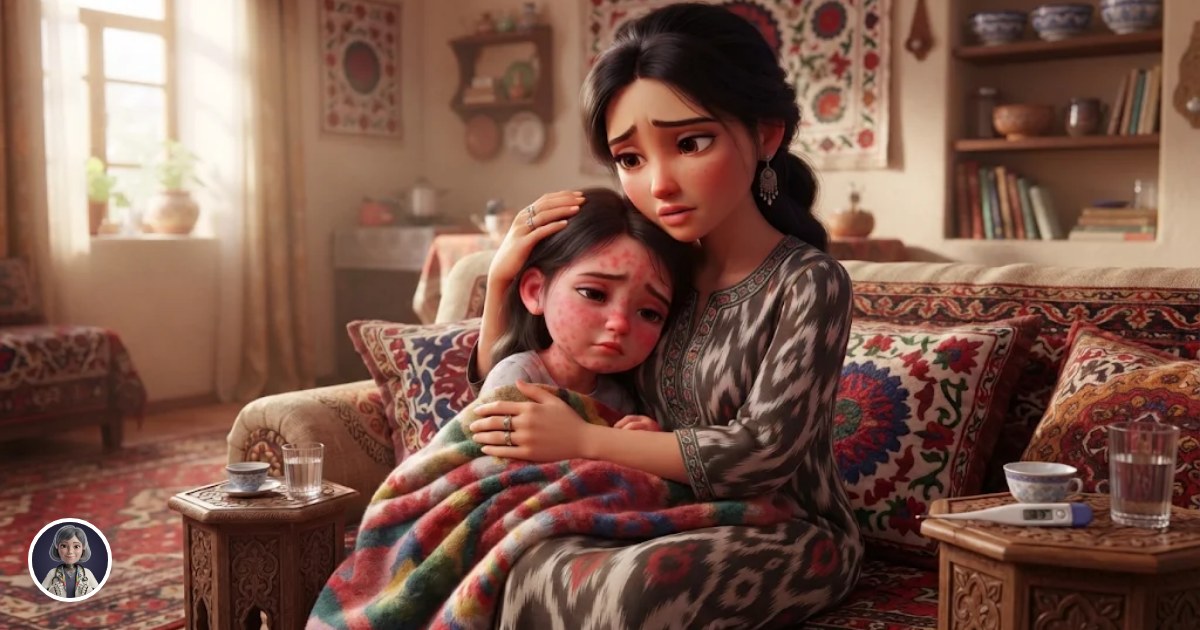
Measles spreads through the air and can infect nearly anyone who is not immune. Symptoms begin 7–14 days after exposure with 4–7 days of fever, cough, runny nose, red watery eyes, and small white spots on the inside of the cheeks (Koplik's spots). The rash appears 3–5 days into the illness, starting on the face and spreading downward over three days.
Complications are what make measles deadly, especially in children under five. WHO lists pneumonia (the leading cause of measles death), corneal inflammation leading to blindness, encephalitis, and severe dehydration. Children who are malnourished or lack vitamin A face the highest risk.
Two vaccine doses protect against measles. The first is typically given at 9–15 months, the second at 15–18 months. WHO 2025 figures: 84% received the first dose; 77% got both. There is no antiviral treatment — care focuses on managing symptoms, preventing complications, and vitamin A supplementation.
Seek medical attention if your child develops fever above 38 °C with cough and red eyes, followed by a rash a few days later. Keep the sick child away from others: measles is contagious from the onset of symptoms until four days after the rash appears.
Source: World Health Organization · Read the original source ↗
Share this news